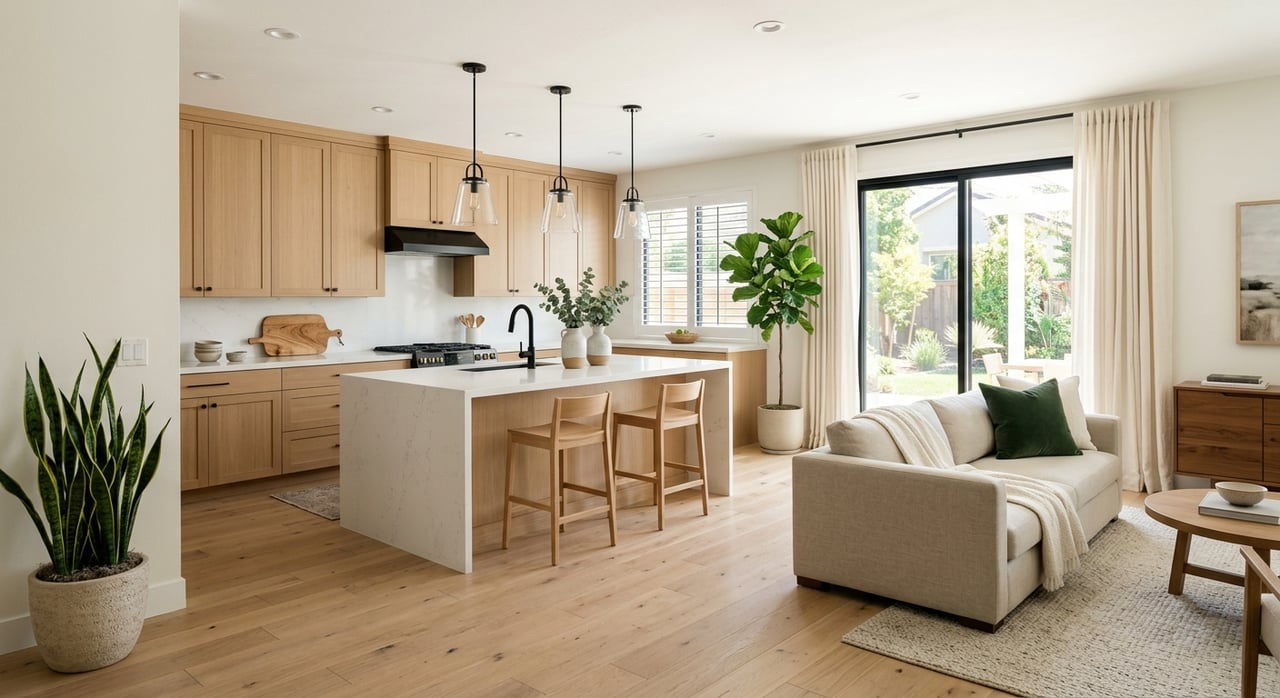
McKinney Rental Market for Investors: Local Guide
May 7, 2026
May 7, 2026
If you own a rental in McKinney or you are thinking about buying your first investment property here, one question matters fast: does this market still work for small local investors? The short answer is yes, but not in a simple bargain-hunt way. McKinney is a suburban rental market where pricing, property type, tenant expectations, and day-to-day management all matter. This guide will help you understand where rents sit, what demand looks like, and how to think about a smart buy-and-hold strategy in McKinney. Let’s dive in.
McKinney sits in a strong position within the broader DFW rental landscape. The city’s population reached an estimated 227,526 in 2024, up 16.5% from April 2020, which points to continued growth and housing demand. The owner-occupied housing rate is 63.8%, median gross rent is $1,901, and median household income is $124,215.
Those numbers matter because they show a market that is not built around low-cost rentals. McKinney is a higher-income suburban city with an average household size of 2.82 people, and about 26.2% of residents are under 18. For a small investor, that supports a rental mix that often leans toward households looking for practical space, predictable commutes, and long-term livability.
Compared with the broader area, McKinney also rents above typical benchmarks. Collin County’s median gross rent is $1,859, while Texas sits at $1,403. That gives McKinney a clear position as a stronger-rent suburb rather than a discount market.
One of the first things small investors notice is that rent numbers can look different depending on the source. That does not mean the data is wrong. It usually means each source is tracking a different slice of the market.
RentCafe’s March 2026 snapshot puts McKinney’s average apartment rent at $1,657. It reports studios at $1,104, one-bedroom units at $1,397, two-bedroom units at $1,791, and three-bedroom apartments at $2,431.
Zumper’s May 2026 snapshot shows a broader picture across property types. It reports a median rent of $2,350 across all bedroom counts and property types, with apartments averaging $1,657 and houses for rent averaging $2,500. That gap is important because many small investors in McKinney focus on single-family homes and townhomes, not just large apartment communities.
The City of McKinney’s 2026 affordable housing assessment, using CoStar data, reported average effective multifamily rents in 2023 at $1,367 for studios, $1,422 for one-bedroom units, $1,884 for two-bedroom units, and $2,308 for three-bedroom units. Taken together, the clearest takeaway is this: smaller apartment units tend to cluster in the mid-$1,000s, while well-located houses, townhomes, and larger units often move into the mid-$2,000s and beyond.
Citywide averages are useful, but they do not tell the whole story. Neighborhood-level data shows that some McKinney submarkets command much higher rents than the citywide middle.
Redfin’s rental market tracker lists median rents around $2,695 in Stonebridge Ranch, $2,675 in Craig Ranch, $2,650 in Westridge, $3,700 in Starcreek, and $3,999 in Twin Creeks. These are neighborhood medians, not guaranteed rent levels for every property. Still, they are helpful if you are comparing where higher-rent inventory tends to cluster.
For small investors, this means location inside McKinney matters just as much as the city itself. A clean, well-maintained property in a stronger submarket can attract a very different tenant pool than a similar home in a more average rent band.
At first glance, some vacancy numbers in McKinney may look high. The city’s 2026 affordable housing assessment says simple multifamily vacancy reached 15.7% in Q3 2025. But that number includes newly built properties still in lease-up.
When the city looks at stabilized vacancy instead, which removes much of that lease-up distortion, the rate was 8.0%. For comparison, the Dallas-Fort Worth-Arlington metro posted a stabilized vacancy rate of 9.4%. That tells you McKinney’s operating market is tighter than the simple headline number suggests.
Supply growth helps explain the gap. About 12% of McKinney’s multifamily rental units were built from Q4 2024 through Q3 2025, compared with 4% across the Dallas metro overall. In other words, new product hit the market quickly, and that can temporarily inflate vacancy even when underlying demand is still healthy.
The city’s data also shows that lower-cost units are especially hard to find. Only 5.4% of units renting for less than $1,000 per month were vacant, while every higher rent band posted at least 6.7% vacancy.
That fits with the city’s broader affordability picture. McKinney’s consolidated plan says there is a shortage of 4,631 rental units for households earning below $50,000, and the city reports the largest rental gap compared with nearby cities such as Allen, Plano, Frisco, and Prosper. For investors, that does not mean every lower-rent property is easy money. It does mean affordability pressure is real, and pricing strategy matters.
A large share of McKinney renters are already paying meaningful monthly housing costs. The city’s 2023 ACS-based rent distribution shows 31.71% of renter households paid $1,000 to $1,499, 28.81% paid $1,500 to $1,999, and 30.65% paid $2,000 or more. That means roughly 60% of renters were already paying at least $1,500.
The city also reports that 81% of low-income renter households are cost burdened, and 32% are severely cost burdened. Another useful point for investors is that roughly 85% of all homes in McKinney are priced above $296,138, while only 33% of renter households have incomes of $100,000 or more. That gap helps explain why many households remain renters even in a market with high ownership appeal.
For you as an investor, this creates a balancing act. Strong asking rents may be possible in the right property and location, but the best long-term result may come from pricing realistically, reducing vacancy, and keeping good tenants in place.
Tenant expectations have become more practical and more specific. Zillow’s 2025 renter survey shows that recent renters care most about staying within budget, finding the right neighborhood, getting the right number of bedrooms and bathrooms, and choosing a floor plan that fits their needs.
When renters compare areas, commute, walkability, access to shopping and leisure, and proximity to family or friends all matter. In a suburban market like McKinney, this supports the appeal of homes and townhomes with usable space and easy daily function.
Amenities also play a major role in listing performance. Zillow reports that off-street parking and in-unit laundry are the most in-demand features in rental listings. Pet-friendly outdoor space, air filtration, and coworking-style space also increase engagement.
Convenience is not optional anymore. Zillow found that 79% of recent renters say at least one digital feature is essential, 59% say seeing lease terms, rent, and fees is essential, 55% say a private tour is essential, and 40% signed electronically in 2025.
Online payments matter too. Zillow reports that 65% of recent renters would ideally pay rent online. For small local investors, that is a strong case for a leasing and management process that is fast, clear, and easy to use.
Based on the public data, McKinney looks strongest for investors who focus on suburban product, not bare-bones rentals. Well-maintained single-family homes, townhomes, and two- to three-bedroom rentals line up with the city’s household profile, rent levels, and tenant preferences.
That does not mean every property in those categories will perform the same way. Layout, parking, laundry setup, yard usability, condition, and neighborhood positioning all affect rent and leasing speed. In a market with both new supply and affordability pressure, execution matters.
For many small investors, the sweet spot is a property that rents well without overreaching on price. A clean, move-in-ready home with practical features can often compete better than a higher-priced listing that sits too long.
This is where many small investors win or lose. The city’s vacancy data suggests that newer supply can make the market look softer on paper, but stabilized vacancy is much tighter. That means leasing speed, tenant screening, maintenance response, and accurate pricing may matter more than chasing the absolute top asking rent.
Texas law also gives useful structure here. According to the Texas State Law Library, a landlord cannot change rent during an active lease unless the tenant agrees. Once a lease term ends, Texas law does not prevent a landlord from increasing rent, though any increase still needs to make sense for the market and the property.
If you are self-managing, you need a system for marketing, showings, screening, lease execution, rent collection, and maintenance coordination. If you want a more hands-off hold, having leasing and property-management support can reduce friction and help protect your time.
If you are building or refining a small portfolio in McKinney, keep your plan simple and disciplined. This market tends to reward investors who buy for durability, not just for a flashy pro forma.
A practical approach often looks like this:
McKinney is not a one-size-fits-all rental market. But for small local investors who want a suburban Collin County hold with stronger-than-average rent levels, it offers real opportunity.
If you want help evaluating a buy-to-rent property, setting realistic rent expectations, or handling leasing and property management in McKinney, Harman Cheema can help you build a practical plan that fits your goals.
Stay up to date on the latest real estate trends.

Your dream home is closer than you think. When you work with me, you’re choosing a partner who combines local market knowledge, cutting-edge technology, and a passion for delivering success. With my expertise, dedication, and personalized service, your buying and selling journey will be smooth, seamless, and enjoyable. Contact me today to schedule a consultation and take the first step toward your future!