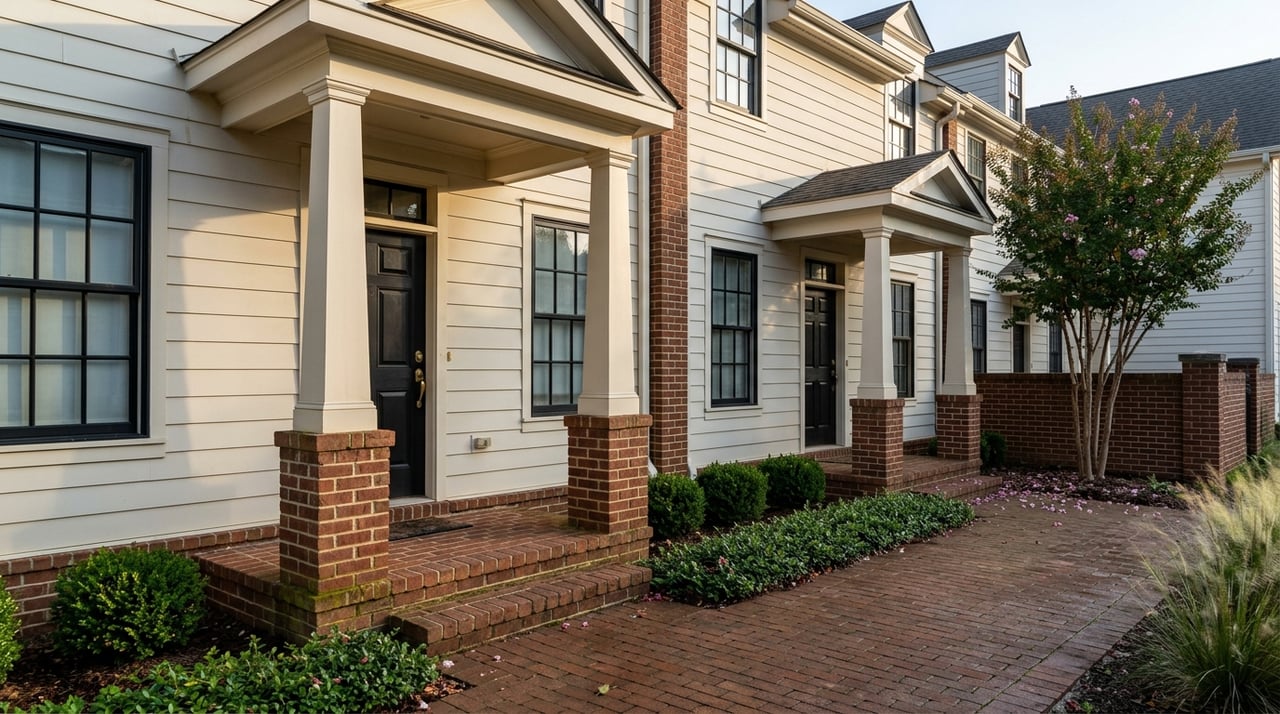
Why Some Las Colinas Closings Take Longer Than Others, and It's Not the Buyer's Financing
August 27, 2026
August 27, 2026
Two attached homes go under contract on the same Las Colinas street, in the same week, with buyers who both got fully underwritten conventional loans from the same local lender. One closes on schedule. The other slips by nearly two weeks, not because of an appraisal gap or a slow title search, but because of a document neither seller thought to ask about until their agent brought it up: the resale certificate, and which version of Texas law actually governs it.
This is not a hypothetical quirk. It is a direct consequence of how Las Colinas was built. The community sits inside a master association that layers on top of dozens of smaller private associations, and depending on how a specific building or enclave was originally platted, the seller may owe one resale certificate or two, and the buyer may or may not have a legal right to walk away for five days after receiving it. Two units that look identical from the street can carry different paperwork, different fees, and different contingency clocks.
Most people who buy into Las Colinas know they are joining a homeowners association. Far fewer realize they are joining two.
The Las Colinas Association, known as LCA, is the master association covering the entire master-planned community. Every deed-restricted property owner in Las Colinas is a member, and LCA collects an annual assessment based on the county's certified property value, along with a separate fee if a resale certificate is requested during a sale. For 2026, LCA set its assessment rate at 0.115 per $100 of assessed value, with statements sent to members by mail and email earlier this year. On a home valued near the neighborhood's current median in the high $600,000s to low $700,000s, that works out to roughly $770 to $840 a year in master association dues alone, before a single dollar goes to a private village HOA or condo association.
That second layer is where the surprise usually lands. Communities like Las Colinas Moradas, Terraces of Las Colinas, and Villas at Las Colinas each run their own association, collect their own dues, and issue their own resale certificate when a unit inside their community sells. A seller who orders a certificate from LCA and assumes the paperwork is done has only finished half the job if their property also sits inside one of these village-level associations, which describes most of the condo and townhome product in Las Colinas.
A Texas resale certificate is the document that tells a buyer what they are actually inheriting when they take title. It discloses the association's current operating budget, any special assessments on the horizon, whether the association is party to pending litigation, and whether the seller owes any unpaid dues or fines. That last point matters more in Texas than buyers often expect: unpaid HOA dues and fines generally attach to the property, not the person, so an unresolved balance can transfer to the new owner if it is not caught and cleared before closing.
LCA's own version of this package includes a review of the specific property, a statement of any amounts owed, the current assessment rate, and a digital file of governing documents, bylaws, and deed restrictions delivered through Dropbox. A village-level association's certificate covers the same categories for its own budget and rules. When both apply, a buyer's agent and a title company end up reviewing two separate financial pictures of the same transaction.
Here is the distinction that actually changes how a closing behaves, and it has nothing to do with price or square footage.
Texas regulates resale certificates under two different statutes depending on how a property is legally organized. A townhome or single-family lot inside a homeowners association is typically governed by Property Code Chapter 207, the Property Owners' Association Act. A true condominium, meaning a unit inside a building where ownership is defined by the Uniform Condominium Act, falls under Chapter 82 instead. Both cap the resale certificate fee at $375 and both require delivery within 10 business days of a written request. Where they diverge is the buyer's ability to walk away after reading what is inside.
| Chapter 207 (POA / townhome) | Chapter 82 (condominium) | |
|---|---|---|
| Required disclosure items | 10 | 9 |
| Fee cap | $375 ($75 for updates) | $375 |
| Delivery deadline | 10 business days | 10 business days |
| Certificate stays current for | 60 days | Must be prepared within 3 months of delivery |
| Buyer's right to cancel after receiving it | None under this statute; governed by the TREC contract option period | Separate 5-day statutory right to cancel, starting the day the buyer receives it |
That five-day rescission window under Chapter 82 exists whether or not a title company or listing agent flags it. If a condominium's resale certificate arrives late in a transaction, close to the scheduled closing date, that five-day clock can push the actual closing back regardless of what the contract's original timeline said.
The catch in a community like Las Colinas is that you cannot tell which statute applies just by looking at a listing photo. A high-rise tower like Grand Treviso on Lake Carolyn is built and marketed as a true condominium, the kind of product Chapter 82 was written for. A gated rowhome enclave like La Villita is sold and lived in as a townhome, but whether it carries condominium ownership or standard fee-simple lots inside a POA depends on how the developer originally recorded it. The only way to know for certain is to read the property's own declaration, not to assume based on the word "townhome" or "condo" in the listing.
None of this is abstract money in a market where the numbers are small. Las Colinas is not a starter-home submarket. Over the three months ending May 2026, Las Colinas homes sold at a median price of $681,000, well above Irving's citywide listing median of $449,000 as of August 2026, and townhomes currently on the market there range from roughly $389,000 to just over $1 million. Homes in the neighborhood were spending 49 to 59 days on market as of the spring 2026 data, which is a tighter window than it sounds once you start layering in sequential paperwork.
Run the fee math on a property that sits inside both LCA and a private village association. Each certificate is capped at $375, so a seller could reasonably be looking at $750 in combined resale certificate fees rather than the $375 that gets quoted when people only think about the master association. If a contract drags past the 60-day currency window on the Chapter 207 side, add another $75 to refresh it. None of these numbers will sink a $700,000 sale, but they are real line items that belong in a seller's closing cost conversation from day one, not a surprise that surfaces during option period.
Does every property in Las Colinas need two resale certificates? No. It depends on whether the specific property sits inside a private village HOA or condo association in addition to the master LCA. Many do, since most of the community's attached product was developed inside individual village associations, but it is worth confirming for your specific address rather than assuming.
Who pays for the resale certificate in Texas? Practice varies. Some sellers order and front the fee as part of preparing the listing, while other contracts assign the cost to the buyer at closing through the standard property owners' association addendum. Confirm which applies in your specific contract rather than assuming either way, especially if two certificates are involved.
What happens if a resale certificate arrives late? Under both statutes, an association's failure to deliver on time can give the buyer grounds to cancel the contract. A knowledgeable title company will flag a slow-moving association before that becomes a problem, which is one more reason to order certificates early rather than waiting for the option period to run.
Las Colinas rewards buyers and sellers who understand its layered structure and it can quietly cost the ones who don't. If you are getting ready to list a condo or townhome here, or you are underwriting one as a purchase, it is worth having someone walk the specific declaration with you before a contract is signed rather than after. HXC Real Estate works this submarket regularly and can tell you in a single message which statute applies to your address and what it means for your timeline. Message Harman on WhatsApp to get that answer before you sign anything.
Stay up to date on the latest real estate trends.

Your dream home is closer than you think. When you work with me, you’re choosing a partner who combines local market knowledge, cutting-edge technology, and a passion for delivering success. With my expertise, dedication, and personalized service, your buying and selling journey will be smooth, seamless, and enjoyable. Contact me today to schedule a consultation and take the first step toward your future!